How many clients can a media buyer manage? The industry rule of thumb and your own math
By Matheus Mello, founder of Ads Editor and owner of YEP Agência · Published · Updated · 9 min read
How many clients can a media buyer manage? There is an industry answer and a personal one. The industry answer: a solo media buyer usually lands around 15 clients, and an agency around 40. Your answer comes from one division you can run with a stopwatch. Below: the math, a worked example, the path from 15 to 40 and the signs that it is time to stop signing.
Quick answer
In practice, a solo media buyer typically handles around 15 clients, and agencies around 40. That is a rule of thumb, not a ceiling. Your own number comes from one division: weekly hours spent on client work divided by the hours each client takes. Time one normal week before you sign or hire.
Summary
- Rule of thumb: a solo media buyer handles around 15 clients; an agency, around 40. It is an observation from the market, not a survey.
- Capacity equals weekly client hours divided by the hours each client takes, minus about 20% slack.
- An ad account is not a client: one client can have several accounts, and clients vary a lot in how much work they take.
- Launching ads, reporting, routine rules and balance checks are repetitive work you can cut; meetings and strategy are not.
- You get from 15 to 40 with process, tools and team, in that order. Without slack in the week, a new client costs you an old one.
- On Ads Editor, freelancers with no team run 35 ad accounts or more alone, because the repetitive work no longer takes up their week.
In this article · 6 sections

What is the average number of clients per media buyer?
In practice, a media buyer working alone typically handles around 15 clients. Agencies, with a team, sit around 40. These numbers come from what you see across the industry, not from a survey, and they are useful for one thing: knowing whether you are far below or far above the norm before you dig into why.
| Profile | Typical clients | How the work is split |
|---|---|---|
| Solo media buyer | Around 15 | One person handles operations, client communication and strategy |
| Agency | Around 40 | Operations split across people, backed by process and tools |
If you count the accounts connected inside any tool, the number usually comes out lower, because not every client gets connected and not every plan allows many accounts. To plan your portfolio, the rule of thumb and your own stopwatch tell you more than a dashboard count.
Why do two media buyers give such different answers?
Because no two clients weigh the same. A local business with a small budget and one always-on campaign can fit in an hour a week. An ecommerce brand that wants a creative pack every Monday and a report every Friday can take an afternoon. Someone with 30 clients of the first kind and someone with 8 of the second can both be at capacity.
What makes a client heavy:
- Creative volume. Every new ad means an upload, copy, a link and a check. Ten a week in one account is different work from two a month.
- Number of accounts and platforms. A client on Meta Ads and Google Ads, or with one account per store, multiplies the routine.
- Communication cadence. A weekly meeting and reports on demand cost more than a monthly summary.
- Risk. Launches, accounts with a history of restrictions and budgets that run out mid-month need daily monitoring.
Is an ad account the same as a client?
In everyday conversation the two words get used interchangeably. In the math, they are not the same thing. One client can have several ad accounts (by brand, by store, by payment method), and an account can sit idle because the client paused spending. That is why the math below is done per client, adding up the time of all their accounts.
How do you calculate how many clients you can handle?
It is one division. The work is measuring the divisor honestly.
- Weekly hours for client work. Subtract sales, finance, learning and internal meetings. What is left is your hours budget.
- Hours per client per week. Time one normal week, client by client, separating the tasks in the table below.
- Capacity equals client hours divided by hours per client. If the portfolio is mixed, do it per client type and add them up.
- Keep slack. Launch weeks, a restricted account and a new client in onboarding eat far more than average. Leaving about 20% of the week free keeps the first surprise from knocking everything over.
A worked example with round numbers
Illustration, not measurement: a solo media buyer works 40 hours and keeps 10 for sales and admin. That leaves 30 client hours. If each client takes 2 hours a week, the math gives you 15, the rule of thumb, or 12 once you hold back 20% slack. If the repetitive part drops from 1 hour to 15 minutes per client, each one takes 1 hour 15 minutes and the same week fits 24. With 20% slack, that is 19 clients without working nights.
| Task | Type | What changes with a tool |
|---|---|---|
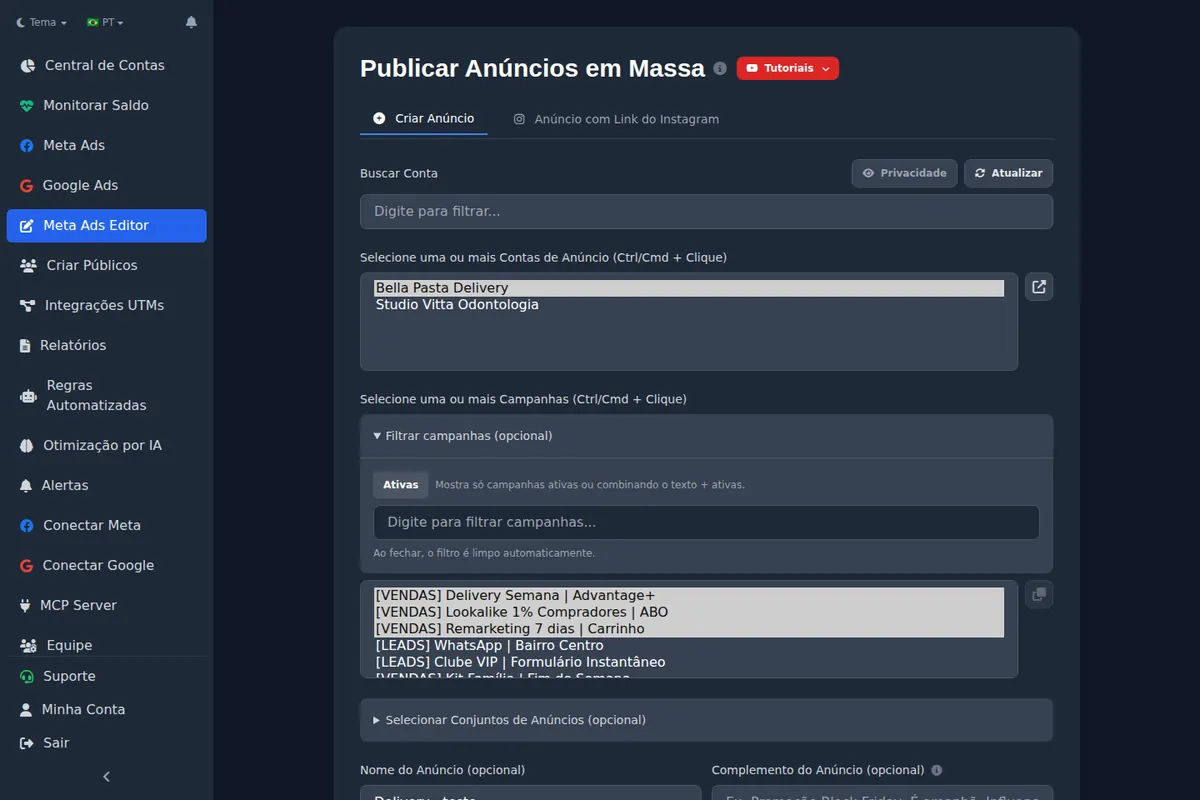
| Launching new creatives | Repetitive, grows with volume | Drops: the queue publishes the whole pack, across accounts, in one action |
| Replicating a structure in another account | Repetitive | Drops: the copy swaps the Page, Instagram account and pixel in one go |
| Building audiences | Repetitive | Drops: bulk creation by source and time window |
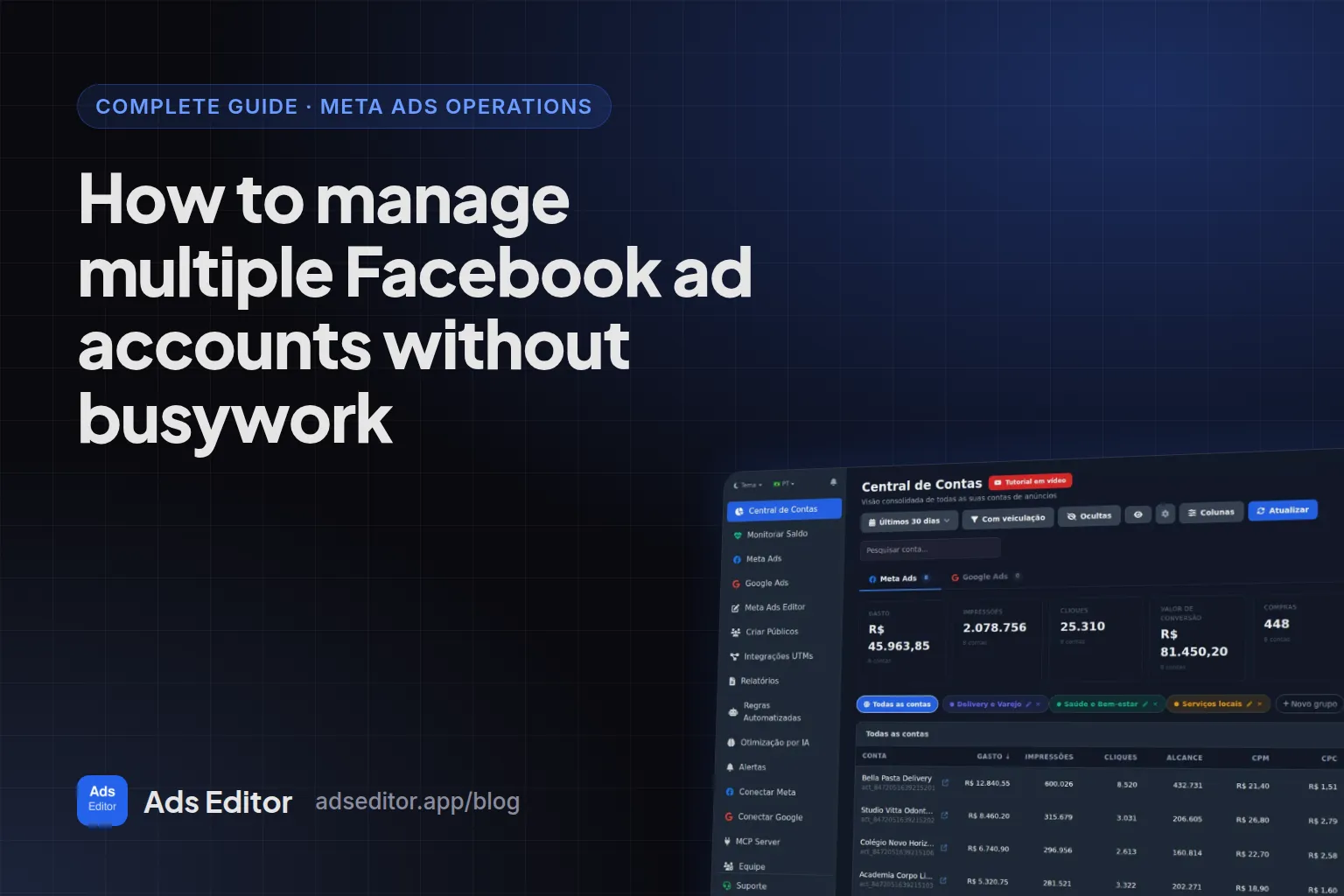
| Checking balances and payments | Monitoring | Drops: every account on one screen, colored by days of balance left |
| Pausing whatever went over its cost target, routine budget changes | Monitoring | Drops: an automated rule applies the criteria you set |
| Client reporting | Semi-repetitive | Drops if the report is a link the client opens on their own |
| Analysis and optimization decisions | Judgment | Does not change: still the media buyer's job |
| Meetings and client communication | Relationship | Does not change |
How to ship creative volume without repeating the manual process for every ad is in how to bulk upload Meta Ads. Everything the tool cuts is listed on the features page.
How do you go from 15 to 40 clients?
Nobody gets to 40 by working almost three times faster. You get there by changing three things, in this order:
- Process. Standard naming, a fixed review day for each client and an onboarding checklist. Without them, every new client is a project built from scratch.
- Tools. Take the repetition off your plate: bulk uploads, copying between accounts, routine rules, report links and every account's balance on one screen.
- Team. Only after the first two. Hiring someone to do repetitive work is paying a salary for clicks. With process and tools in place, each new hire comes in to analyze and talk to clients.
| Portfolio | Where the time goes | What unlocks it |
|---|---|---|
| Up to 5 clients | Everything fits in your head; work is done by hand | Start timing and standardize campaign names |
| Around 15 | Creative uploads and reports eat your evenings | Bulk uploads, report links, rules and balance monitoring |
| Around 40 | Client communication and team coordination | Accounts assigned per person, per-account permissions and a fixed review day |
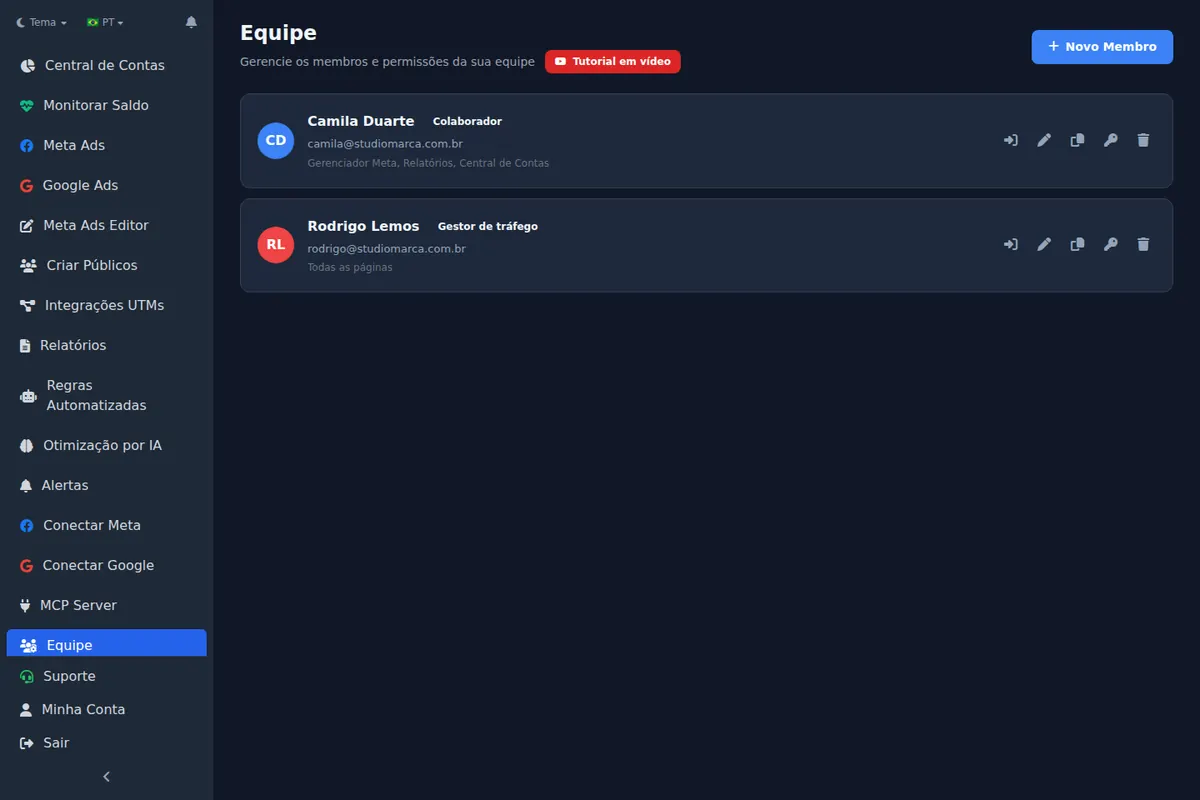
At agency size, the ceiling is no longer clicks; it is client conversations and decisions. The permission walkthrough is in giving your team access by ad account, and the full playbook in how to manage multiple Meta Ads accounts.
Can one person run 35 ad accounts alone?
Yes. Today, on Ads Editor, there are freelance media buyers with no team at all running 35 or more ad accounts on their own. What makes that volume possible without burnout is not longer hours. It is taking the repetitive work out of the week: the creative batch goes out to several accounts at once, the report is a link that updates itself, rules pause and scale at the right time, and the account monitor flags a low balance before an account stops delivering. What is left for the media buyer is what only they can do: talk to the client and make decisions.
Does a tool make Meta faster?
No. Batching saves your clicks; it does not lift Meta's limits. Meta's own documentation says each action inside a batch still counts separately toward its usage limits. The gain is taking the human out of the manual work, not making Meta process anything faster.
When should you stop taking on clients?
When the week has no slack left. The signs show up before the client complains:
- A client's weekly review was skipped twice in a row.
- An account's balance ran out and you heard about it from the client.
- Reports go out late, or go out with numbers and no analysis.
- A client has gone a month without new creative and nobody made that call.
- The client you are about to sign is paying less than the hours they will take are worth.
A new client without slack costs you an old one
A client added to an already full week does not raise revenue for long: it raises the odds of losing a client who was happy. Before you sign, cut hours out of the routine or raise your price.
To check whether your price covers the hours, compare what each client pays with what your hour is worth; the pricing side of that math is in how much media buyers make. If the repetitive part is what keeps you from saying yes, see what each plan includes on the pricing page.
Frequently asked questions
How many clients can a media buyer manage alone?
Around 15 is the common rule of thumb for a solo media buyer. Your own number is weekly client hours divided by the hours each client takes, minus about 20% slack; time one normal week to find it.
How many clients does a media buying agency handle?
Agencies usually sit around 40 clients, with operations split across people and backed by process and tools. The number varies a lot with agency size and client type.
Does a tool increase the number of clients I can handle?
It shrinks the repetitive part: launching creatives, copying campaigns, building audiences, routine rules, reports and balance checks. Meetings, analysis and decisions stay the same, so the gain depends on how much of your week is repetition.
Is an ad account the same as a client?
No. One client can have several ad accounts, and some connected accounts sit idle. To calculate capacity, add up the time of all accounts for each client.
Glossary
- Capacity
- How many clients fit in a week: client hours divided by the hours each client takes.
- Slack
- The part of the week kept free for launches, account restrictions and onboarding new clients.
- Repetitive work
- A task that repeats the same way in every account and grows with volume, like launching ads and checking balances.
- Ad account
- The account on Meta or Google where campaigns run. One client can have several.
References
- Batch requests (Meta for Developers). Supports: Each request inside a batch is counted separately toward Meta's usage limits; a batch holds at most 50 requests.
The claim supported by each source is shown above.
About the author
Matheus Mello, founder of Ads Editor and owner of YEP Agência. Runs client ad accounts at YEP Agência and built Ads Editor so his own agency could stop publishing ads one at a time. Usage numbers quoted on the blog come from the product activity log. Instagram: @theusm